Pioneers In Fiber Reinforced Concrete
Fiber-Reinforced Concrete Flooring Solutions
Our systems combine steel fiber manufacturing, engineering design, and specialized execution techniques to provide high-performance concrete floors with reliable long-term behavior.
Modern industrial facilities require flooring systems capable of withstanding heavy loads, continuous traffic, and demanding operational conditions. At Egyptian European Steel Fiber (EESF), we deliver engineered fiber-reinforced concrete flooring systems designed to meet the structural, operational, and durability requirements of large-scale industrial environments.
Engineering-Driven Flooring Design
Industrial concrete floors are structural elements that directly affect the efficiency and safety of industrial operations.
EESF designs flooring systems based on actual operational and structural conditions, including:
Static and dynamic load analysis
Forklift and heavy vehicle traffic
Storage rack load distribution
Flatness and levelness tolerances
Crack control and joint performance
Long-term durability requirements
By adopting a performance-based engineering approach, each flooring system is optimized for structural efficiency and operational reliability.
Advantages of Fiber-Reinforced Flooring Systems
Fiber reinforcement provides significant improvements compared with traditional reinforcement methods when correctly designed and implemented.
Key benefits include:
Enhanced crack control and structural performance
Improved load distribution within the concrete slab
Reduced reliance on traditional steel mesh reinforcement
Increased resistance to impact and fatigue
Faster construction and reduced installation time
Lower maintenance and lifecycle costs
These advantages make fiber-reinforced concrete floors particularly suitable for large industrial facilities and logistics operations.
Types of Industrial Flooring Systems
Warehouse & Logistics Flooring
Designed for high-bay storage facilities and logistics centers where flatness, load capacity, and operational continuity are essential.
Typical characteristics:
Super flat floors (FM2 / FM3)
Laser Screed execution
Optimized joint spacing
Heavy-Duty Industrial Floors
Engineered for factories and production facilities exposed to heavy machinery, dynamic loads, and abrasive environments.
Typical characteristics:
High-strength fiber-reinforced slabs
Enhanced abrasion resistance
Long-term structural durability
Jointless Concrete Floors
Large-panel flooring systems designed to minimize or eliminate traditional joints, improving operational performance and reducing maintenance.
Typical characteristics:
Large slab panels
Reduced joint maintenance
Improved load transfer performance

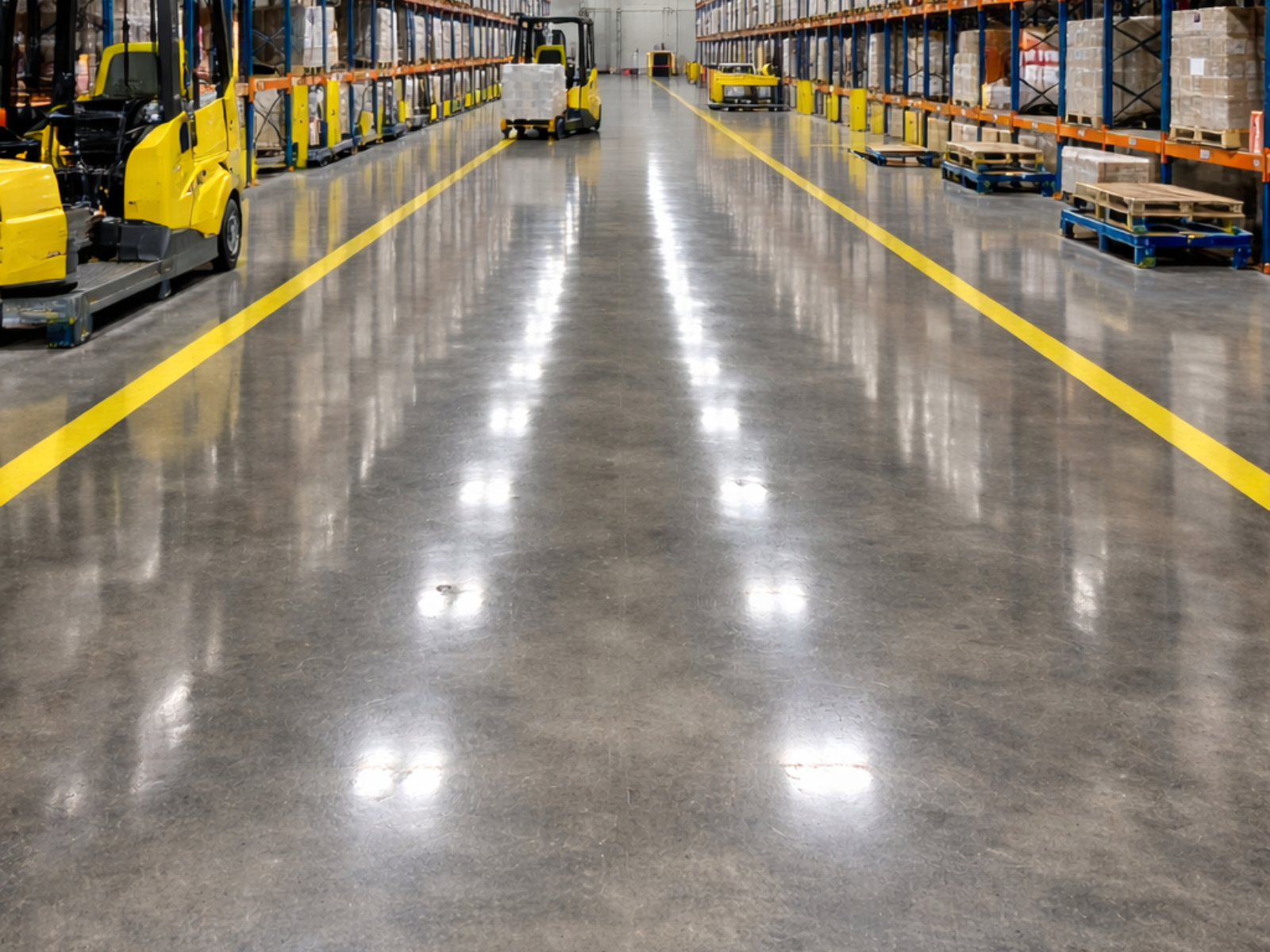
Super Flat Floors (FM2 / FM3)
High-precision flooring systems used in narrow-aisle warehouses and automated storage systems where strict flatness tolerances are required.
Typical characteristics:
Precision Laser Screed technology
Controlled flatness and levelness tolerances
Suitable for high-bay racking systems
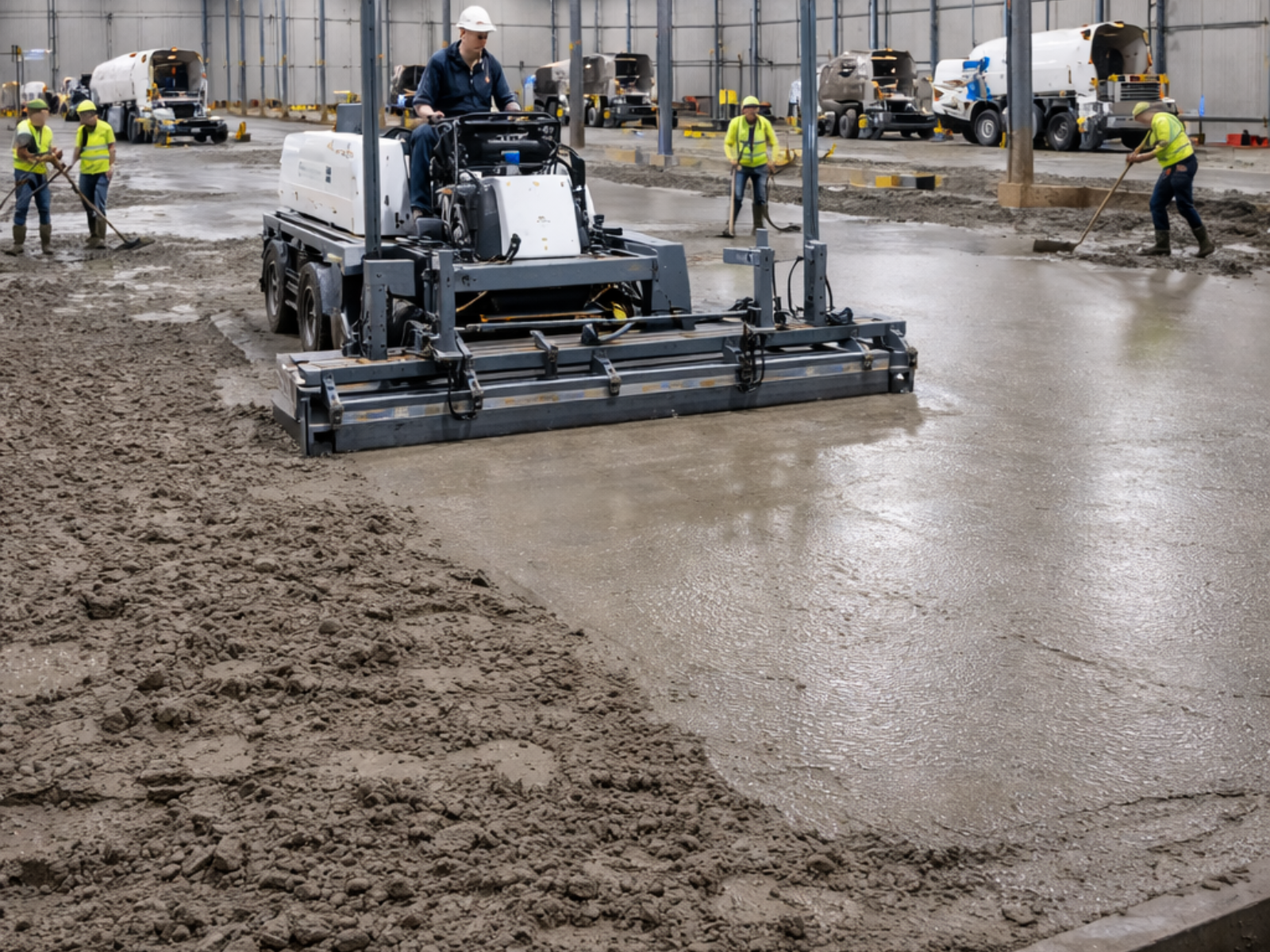
Laser Screed Flooring Systems
Advanced concrete placement technology that ensures high productivity, uniform thickness, and superior surface accuracy across large floor areas.
Benefits include:
Increased execution speed
Consistent slab quality
Reduced finishing errors
Engineering Consultation
Every industrial facility has unique operational requirements.
Our engineering team evaluates project conditions and recommends the most appropriate flooring system to ensure long-term structural performance.
Request an Engineering Consultation
Contact EESF to discuss your project requirements and obtain a tailored industrial flooring solution.
Integrated Manufacturing, Engineering & Execution
One of the key strengths of Egyptian European Steel Fiber (EESF) is our integrated project delivery model, which combines:
Steel fiber manufacturing
Structural engineering design
Industrial flooring execution
This integration ensures that materials, design parameters, and construction methods are fully aligned, minimizing project risks and ensuring predictable flooring performance.
Typical Applications
EESF industrial flooring systems are used in a wide range of sectors, including:
Logistics warehouses and distribution centers
Manufacturing and industrial plants
Food processing facilities
Pharmaceutical production facilities
Data centers and technical facilities
Infrastructure and heavy-load facilities